Townhouse vs Condo vs Single-Family Home in New Jersey: What Buyers Need to Know in 2026
Published | Posted by Dennis Mark Interdonato
- townhouse
- SFH
- Condo
- Home Buying
Buying a home in New Jersey is not just about location, it’s also about choosing the right type of property. Between condos, townhouses, and single-family homes, each option comes with different costs, responsibilities, and lifestyle tradeoffs.
Whether you’re looking in high-demand urban areas like Jersey City or suburban communities across Bergen, Middlesex, or Monmouth County, understanding these differences can help you avoid costly mistakes and choose a home that fits both your budget and long-term goals.
1. What Is a Condo?
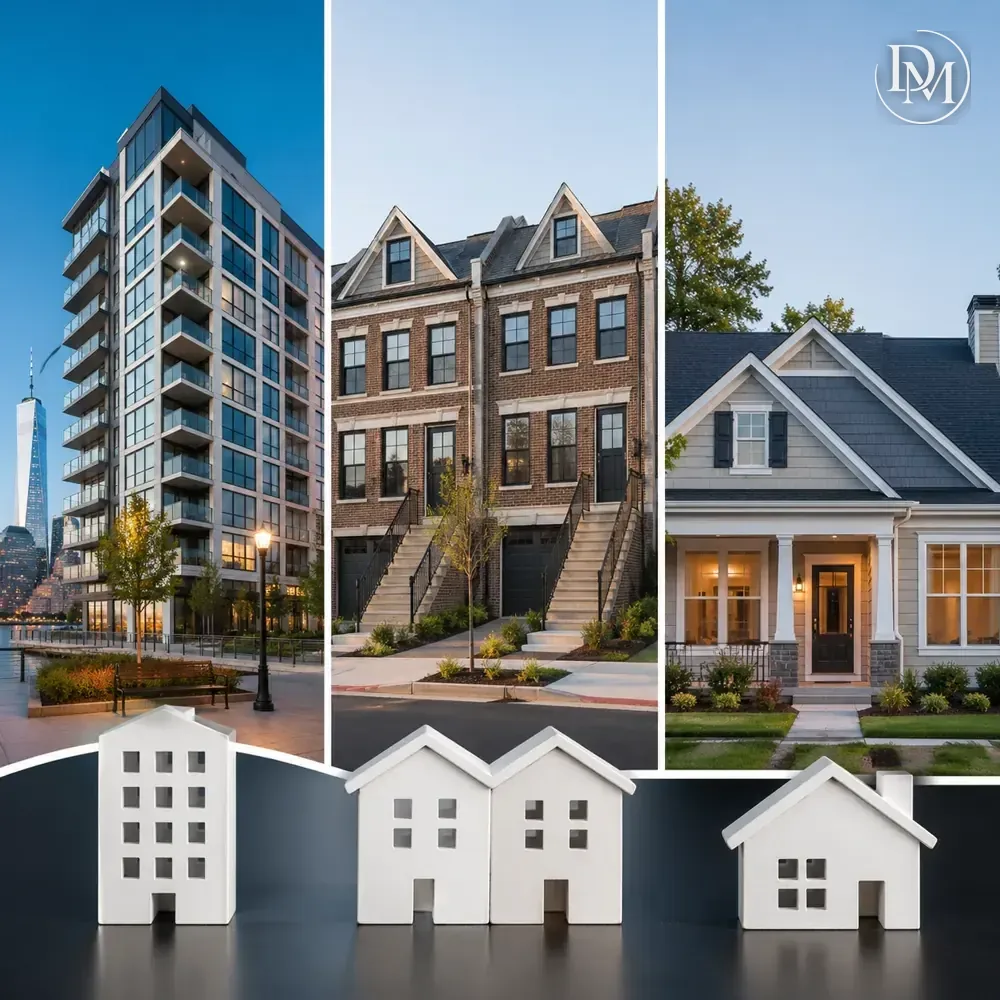
A condominium (condo) is typically an individual unit inside a larger building or complex. You own the interior of your unit, while shared spaces (hallways, gyms, roofs, exterior) are managed by a homeowners association (HOA).
Best for:
- First-time buyers
- Investors
- Buyers who want low maintenance
Pros:
- Lower purchase price compared to townhouses and single-family homes
- Minimal maintenance (HOA handles exterior)
- Amenities like gyms, pools, security
Cons:
- Monthly HOA fees (can be high in NJ cities)
- Less privacy
- Limited control over building rules
Popular NJ condo markets:
- Hoboken (high-rise luxury condos)
- Jersey City (new construction waterfront condos)
- Newark (affordable urban condos)
2. What Is a Townhouse?
A townhouse is a multi-floor home that shares at least one wall with another unit but has its own entrance. You typically own both the interior and exterior structure, but there may still be HOA fees.
Best for:
- Buyers who need more bedrooms
- Buyers wanting more space than a condo
- Professionals balancing affordability and privacy
Pros:
- More space than condos (multiple levels)
- Private entrance
- Often includes small yard or garage
- Lower maintenance than a single-family home
Cons:
- Shared walls with neighbors
- HOA rules may still apply
- Less privacy than detached homes
Common NJ townhouse areas:
- Princeton suburbs
- Middlesex County developments
- Union and Bergen County communities
3. What Is a Single-Family Home?
A single-family home is a fully detached property sitting on its own lot. You own the structure and the land it sits on.
Best for:
- Long-term homeowners
- Buyers needing space
- Buyers prioritizing privacy and control
Pros:
- Full ownership of land and home
- Maximum privacy
- No shared walls
- Freedom to renovate and expand
Cons:
- Highest purchase price in most NJ markets
- Full maintenance responsibility
- Higher property taxes in many towns
Popular NJ single-family home markets:
- Suburban Essex, Morris, and Somerset counties
- Shore towns in Monmouth County
- Suburban neighborhoods across North Jersey
Condo vs Townhouse vs Single-Family Home: Key Differences
Feature | Condo | Townhouse | Single-Family Home |
|---|---|---|---|
Ownership | Interior only | Unit + structure | Home + land |
Maintenance | Lowest | Medium | Highest |
Privacy | Low | Medium | High |
Price | Lowest | Mid-range | Highest |
HOA Fees | High | Moderate | Rare/optional |
What NJ Buyers Should Consider Before Choosing
1. Budget + Monthly Costs
Don’t just compare purchase prices, factor in HOA fees, taxes, insurance, and maintenance.
2. Lifestyle Needs
- Busy professionals often prefer condos in cities like Jersey City or Hoboken
- Buyers who want more space often lean toward townhouses or single-family homes in suburban NJ
3. Commute & Location
Proximity to NYC transit (PATH, NJ Transit) heavily influences condo and townhouse demand.
4. Long-Term Investment
Single-family homes typically appreciate strongly in suburban NJ markets, while condos offer better entry points.
FAQs: Condo vs Townhouse vs Single-Family Home in New Jersey
1. Which is cheaper in New Jersey?
Condos are usually the most affordable upfront, but HOA fees can increase monthly costs.
2. Are townhouses a good investment in NJ?
Yes. Townhouses in commuter-friendly areas often appreciate well due to strong demand from NYC professionals.
3. Do condos appreciate as much as houses?
Not always. Single-family homes typically appreciate faster, but condos in prime areas like Hoboken can still perform strongly.
4. What has the highest maintenance cost?
Single-family homes, because the owner is fully responsible for repairs, landscaping, and exterior upkeep.
5. Which is best for first-time buyers in NJ?
Condos are often the entry point, especially in urban markets like Newark and Jersey City.
6. Can I rent out my townhouse or condo in NJ?
Yes, but many HOAs have rental restrictions, so always review bylaws before purchasing.
7. Which property type has the highest property taxes in NJ?
Single-family homes generally carry higher taxes due to larger lots and property values.
Final Thoughts
Choosing between a condo, townhouse, and single-family home in New Jersey comes down to your budget, lifestyle, and long-term goals, not just the listing price.
In competitive markets like Hoboken, Jersey City, and surrounding suburban counties, understanding these differences can give buyers a major advantage when making fast decisions.