Moving to New Jersey Mid-Year: Part-Year Resident Income Tax Basics
Published | Posted by Dennis Mark Interdonato
- Relocation
- New Jersey income tax
- Moving to New Jersey
- New Jersey residency
If you move to New Jersey partway through the year, you file a regular NJ-1040 and mark the part of the year you were a resident; there is no separate part-year return. You report only the income you received while you lived here, but whether you have to file at all is based on your income for the whole year.
I'm Dennis Mark Interdonato with The Dennis Mark Group at Keller Williams Realty Ocean Living. I'm not a tax professional, and this isn't tax advice. But people moving to Monmouth and Ocean County ask me about this every spring, so here's what the New Jersey Division of Taxation's own instructions say, in plain English, with the links to read the rest.
Who counts as a part-year resident in New Jersey?
You're a part-year resident if New Jersey became your home during the year. The NJ-1040 instructions define domicile as "the place you consider your permanent home - the place where you intend to return after a period of absence." The Division's part-year guide, GIT-6, adds: "You have only one domicile, although you may have more than one place to live."
The Division looks at the facts, including where you're registered to vote, where your driver's license is issued, and where you bank. That's one reason to handle your license transfer and voter registration soon after the move. There's also a second path to residency: if New Jersey isn't your domicile, "you are only considered a resident if you maintain a permanent home and spend more than 183 days here."
Which form do part-year residents file?
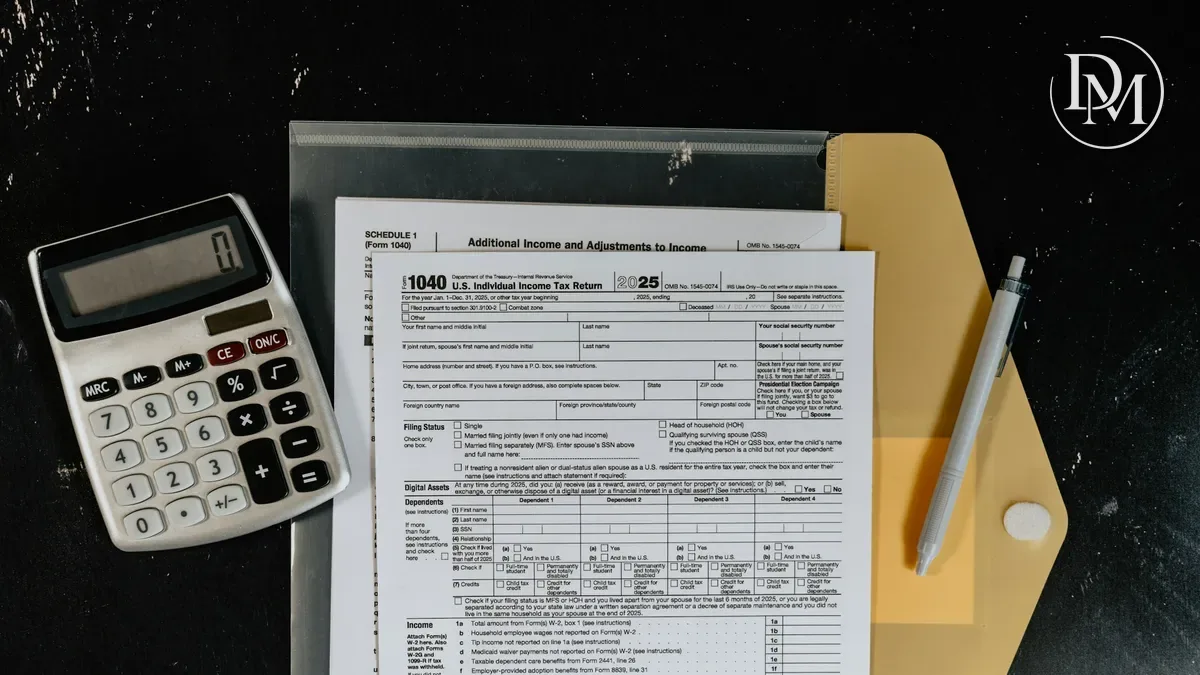
The NJ-1040. In the Division's words, "There is no part-year resident return." GIT-6 explains that part-year residents "must use Form NJ-1040 and indicate the period of their New Jersey residency. The return should show only the income received during that period."
Some people also file a nonresident return. The instructions say you "may have to file both Form NJ-1040 and Form NJ-1040NR," for example if you earned New Jersey income before you moved here. Your tax professional decides which apply to you.
Do you have to file if you only lived here a few months?
Possibly, and this trips people up. The instructions say you must file if your income for the entire year, not only the months you were a New Jersey resident, was more than the filing threshold. For tax year 2025, the threshold was:
- $10,000 for single or married filing separately
- $20,000 for married filing jointly, head of household or qualifying widow(er)
Check the current year's instructions before you file, because thresholds and forms are updated each year.
How do exemptions and deductions work for part of a year?
They're prorated by the months you lived here. The instructions: "You must prorate exemptions, deductions, credits, and the pension/retirement and other retirement income exclusions based on the number of months you were a New Jersey resident. For this calculation, 15 days or more is considered a month."
So if you moved in on June 10, June counts as a month. If you moved in on June 20, it doesn't.
What about income taxed by the state you left?
New Jersey has a credit for taxes paid to other jurisdictions, claimed on Schedule NJ-COJ. Per the instructions, you complete it "only if you had income from outside New Jersey that was taxed by another jurisdiction and subject to New Jersey Income Tax in the same tax year," and "it is not necessarily a dollar-for-dollar credit." The Division may ask for a copy of the return you filed with the other state for the period you weren't a New Jersey resident. The state you left has its own rules for your last year there.
Can new homeowners claim the property tax deduction or credit?
Yes, for the part of the year you lived here. The instructions say, "You can claim a deduction or credit for property taxes or 18% of rent due and paid during the time you were a resident." The deduction is up to $15,000. The $50 credit is prorated by the months you lived in your New Jersey home; GIT-6 gives the example that a nine-month resident is eligible for a maximum credit of $37.50.
That's one more reason to know a home's real tax bill before you buy. Property taxes are set town by town here, and I pull the current bill for every home on your short list. The guide to researching a shore town shows how to look them up yourself.
What should you keep from the year you move?
- Your closing statement and the date you moved in
- Pay stubs or statements that show what you earned before and after the move
- Your property tax bills or rent receipts for the months you lived here
- A copy of the return you file with the state you left
Hand that stack to your tax professional and they'll thank you for it.
How does this fit into the rest of your move?
Taxes are one line on a longer list. The relocation page covers how I help you buy here from another state, and my free Relocation Guide includes the new-resident to-dos, from the MVC to voter registration. If you're selling a New Jersey home on your way out of state instead, a nonresident seller may owe an estimated tax payment at closing, so talk to your attorney early and start with a free home value.
Frequently Asked Questions
Is there a part-year resident tax return in New Jersey?
No. Part-year residents file Form NJ-1040, mark their period of residency, and report the income received during that period.
Do I have to file a New Jersey return if I moved here late in the year?
You must file if your income for the entire year was over the filing threshold, even if you lived here only a few months. For 2025 the threshold was $10,000 for single filers and $20,000 for married filing jointly.
How are deductions prorated for part-year residents?
By the number of months you were a resident, and 15 days or more counts as a month.
Can I claim the property tax deduction in my first year in New Jersey?
Yes, for property taxes or 18% of rent due and paid while you were a resident, subject to the program rules.
This is general information, not legal, tax or lending advice. Your tax professional confirms how these rules apply to you.
About the author
Dennis Mark Interdonato is a REALTOR® and Master CDRE® who leads The Dennis Mark Group at Keller Williams Realty Ocean Living in Point Pleasant, NJ, helping buyers and sellers throughout New Jersey make their next move, with Monmouth and Ocean County as home base. Read more about Dennis Mark.
Keep reading
- How to establish residency in New Jersey
- When you sell your home, do you pay tax?
- What it costs to buy a home in New Jersey
- Have a question this didn't answer? Send it to Dennis Mark and it may become the next article.