New Jersey's Smoke Alarm, CO Alarm and Fire Extinguisher Certificate: What Changed in 2025
Published | Posted by Dennis Mark Interdonato
- Relocation
- Home inspection
- Selling a home in New Jersey
- Buying a home in New Jersey
Before a one- or two-family home in New Jersey changes hands, the owner has to get a certificate from the local fire or code official showing the smoke alarms and carbon monoxide alarms meet state rules. Since February 3, 2025, state law no longer requires a portable fire extinguisher for that certificate, and it added a warning label for homes with generators, solar panels or battery storage.
I'm Dennis Mark Interdonato with The Dennis Mark Group at Keller Williams Realty Ocean Living. If you're moving here from another state, this is usually new: plenty of states don't require an inspection like this at all. Here's how it works, for buyers and sellers, from the rule text and the state Division of Fire Safety.
What is the smoke and CO alarm certificate in New Jersey?
The state fire code says, "Before any one- and two-family or attached single family structure is sold, leased, or otherwise made subject to a change of occupancy for residential purposes, the owner shall obtain a certificate." For years it went by a long acronym, CSACMAPFEC, for smoke alarm, carbon monoxide alarm and portable fire extinguisher compliance. A January 2026 advisory from the Department of Community Affairs renamed it for smoke alarms, carbon monoxide alarms and the secondary power source label.
It's the seller's job. Under the rule, the owner gets the certificate before the change of occupancy, so it's part of the to-do list between contract and closing.
Who issues it?
It depends on the town. If the town has its own resale inspection or certificate of occupancy ordinance, that office checks the alarms before it issues its own certificate. If not, the local fire official who enforces the Uniform Fire Safety Act issues it. That's why the process, the fee and the paperwork look different from one town to the next in Monmouth and Ocean County.
The DCA's 2026 advisory also says these inspections now have to be done by licensed fire inspectors, with housing inspectors allowed to continue until February 3, 2027 while rules are proposed.
What does the inspector check?
- Smoke alarms. One "on each level of the premises" and one "outside of each separate sleeping area."
- Ten-year sealed batteries. Since January 1, 2019, battery-powered smoke alarms have to be ten-year sealed units. The DCA explained that this mostly affects homes built before January 1, 1977; newer homes generally have hardwired alarms, which shouldn't be swapped for battery units.
- Carbon monoxide alarms. Required "in the immediate vicinity of the sleeping area(s)," except in buildings with no fuel-burning appliance and no attached garage.
- The secondary power source label. New in 2025: a home with a secondary power source "shall have a label installed within 18 inches of the main electrical panel and electrical meter warning of the danger." The DCA's memo lists permanently installed generators, solar panels and battery storage systems, and says the label can't be handwritten.
Do you still need a fire extinguisher to sell a house in New Jersey?
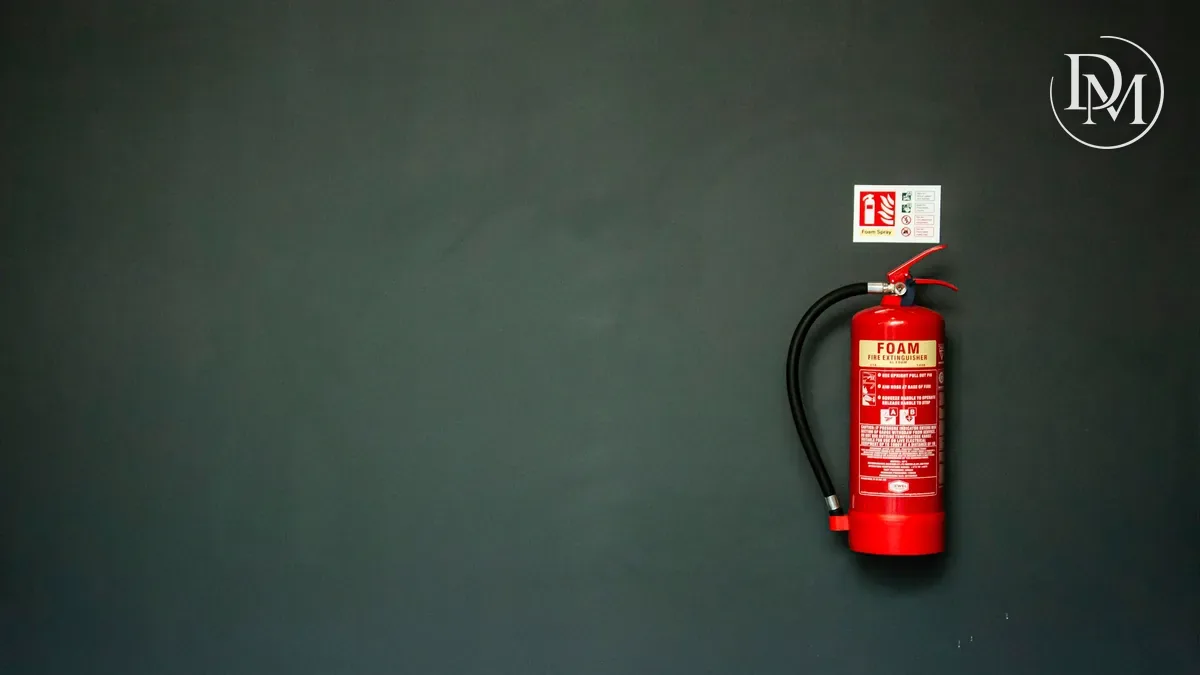
Not under state law. P.L. 2025, c. 19, approved February 3, 2025, rewrote the requirement around smoke alarms and the new label, and the Assembly committee statement says it "eliminates the requirement for portable fire extinguishers in certain structures." The State Fire Safety Commission's May 2025 minutes note that "fire extinguisher requirements have been removed, also effective the day the legislation was passed."
One caution: the state's rule text online still shows the old extinguisher specs, because the updated rules are only proposed. If a checklist still lists an extinguisher, ask the local fire official what your town is checking today. A mounted extinguisher near the kitchen is still a good idea in any home.
How much does it cost, and when should you order it?
Order early. Where the state's fee schedule applies, the fee depends on how far ahead you request it:
- More than 10 business days ahead: $45
- 4 to 10 business days ahead: $90
- Fewer than 4 business days ahead: $161
Towns with their own enforcing agency can set their own fees by ordinance, so the local office has the final number. The certificate isn't transferable, and if the sale doesn't happen within six months of the application, a new application is required.
What should buyers and sellers do?
Sellers: book the inspection as soon as you have a closing date, check every level for working smoke alarms, confirm the CO alarms near the bedrooms, and add the power-source label if you have a generator, solar or a battery system. As a former builder and remodeler, I walk sellers through this before the inspector does, so it's a box to check, not a delay. If you're selling, start with a free home value.
Buyers: ask your attorney to confirm the certificate is in hand before closing. Out-of-state buyers can find how I help from a distance on the relocation page and in my free Relocation Guide.
Frequently Asked Questions
Who is responsible for the smoke detector certificate when selling a house in New Jersey?
The owner. The state fire code says the owner must obtain the certificate before the home is sold, leased or otherwise changes occupancy.
Is a fire extinguisher still required to sell a house in New Jersey?
Not under state law since February 3, 2025. The updated rules are still proposed, so confirm with the local fire official what your town checks.
How long is the certificate good for?
If the change of occupancy doesn't happen within six months of the application, a new application is required. The certificate isn't transferable.
Where do carbon monoxide alarms go?
In the immediate vicinity of the sleeping areas, in any home with a fuel-burning appliance or an attached garage.
This is general information, not legal, tax or lending advice. Requirements and fees are set by state rule and the local enforcing agency; confirm with your town.
About the author
Dennis Mark Interdonato is a REALTOR® and Master CDRE® who leads The Dennis Mark Group at Keller Williams Realty Ocean Living in Point Pleasant, NJ, helping buyers and sellers throughout New Jersey make their next move, with Monmouth and Ocean County as home base. He has been in construction since 2003, building and renovating New Jersey homes. Read more about Dennis Mark.
Keep reading
- What paperwork you need to sell a home in New Jersey
- Buying a home with a private well or septic system
- What it costs to buy a home in New Jersey
- Have a question this didn't answer? Send it to Dennis Mark and it may become the next article.