Who Has to Sign to Sell the House in a New Jersey Divorce, and What If Someone Refuses?
Published | Posted by Dennis Mark Interdonato
- Divorce
- Home Selling
- Monmouth County
- Ocean County
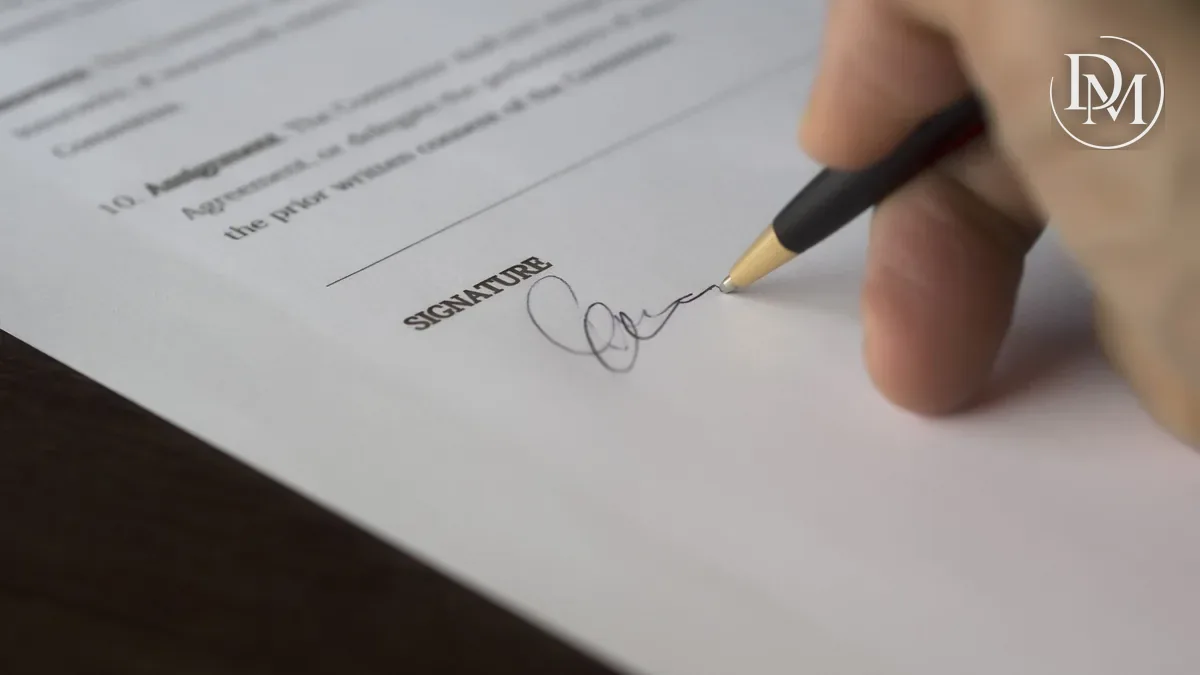
In most New Jersey divorce sales, both spouses sign every document that commits the house: the listing agreement, price changes, the seller's disclosure, the contract, inspection responses and the closing papers. A court order can change who signs, and a refusal doesn't end the sale. It gets written down and goes to your attorneys.
I'm Dennis Mark Interdonato, a REALTOR® and Master CDRE® with The Dennis Mark Group at Keller Williams Realty Ocean Living. Signatures are where a divorce sale either keeps moving or stalls, and most stalls start with someone not knowing a signature was needed. Here's the list, document by document, and what happens when a pen doesn't move.
Why do both spouses usually have to sign?
Because both of you usually own it, and New Jersey protects each spouse's interest in the marital home. When a married couple holds title as tenants by the entirety, neither spouse may sever, alienate or otherwise affect their interest during the marriage or on separation without the written consent of both (N.J.S.A. 46:3-17.4). Even when only one name is on the deed, a married spouse has a right of joint possession in the home the two of you lived in as your main residence, and a buyer takes subject to it unless it's been released or ended, for example by consent or a court order (N.J.S.A. 3B:28-3).
Moving out doesn't take your name off the deed or the mortgage. Neither does stopping payments. Whose signature is needed in your case is a question for your attorney, and the answer belongs in writing before the house is listed.
Which documents need both signatures?
- The listing agreement. Both owners, unless an order assigns that authority to one of you.
- The seller's property condition disclosure. Since August 1, 2024, New Jersey law has required the seller's brokerage to get a property condition disclosure statement filled in and signed by the seller (P.L.2024, c.32). In a divorce, both of you are the seller, and each of you may know different things about the house. Ask your attorney how the two of you complete it.
- Accepting an offer, and the contract. Both owners, and then the contract goes through attorney review. Read how offers are presented in a divorce sale.
- Inspection responses and contract changes. Both owners, usually through the attorneys.
- The closing papers. The deed and the seller's closing documents. Each owner also completes a GIT/REP form so the deed can be recorded; the NJ Division of Taxation says married couples count as one owner, and with more than one owner each form shows that owner's percentage (NJ Division of Taxation). If your divorce is final by closing, ask your attorney how yours are filled out.
Can a court order change who signs?
Yes. An order can give one spouse authority to sign, set deadlines for signatures or say what happens if one of you refuses. In Randazzo v. Randazzo, the trial court authorized one spouse to sign the other's name to the listing agreements if he refused, and in a separate sale let one spouse sign the agreement of sale and the closing documents (opinion text). Your order will say its own thing. I follow it exactly as written, and if it's silent on a document, that question goes to the attorneys before anything is signed.
What happens if one spouse refuses to sign?
The sale pauses. It doesn't end. A pause isn't a failure; it's the point where the record does the work. Here's how I handle it:
- Write it down. What was sent, when, to whom, and what came back.
- Tell both owners the same thing. No private nudges and no side deals.
- Send it to the attorneys. They decide the next step, which can include going back to the court.
- Keep the sale ready. The house stays clean, priced and shown, so when the signature comes, nothing else is behind.
I don't pressure, persuade or take sides. When a judge appointed me to sell a marital home in Monmouth County, one owner worked to stall the sale all the way to the township's final inspection. The record kept it moving, and it closed within five months of my appointment.
If the refusal is about selling at all, not about one document, read what happens when one spouse won't sell the house.
Why do signature delays scare buyers?
A buyer has a deposit, an inspection, a mortgage application and a moving date riding on your signatures. When a signature drags, the buyer's attorney can start questioning whether the sale will close, and a good buyer can walk. A clear signing plan, with response times agreed in writing, tells the buyer's side that authority is settled and deadlines are tracked. Read how communication works during a divorce sale.
What do people get wrong about signing?
- "If one of us refuses, the sale is over." No. The attorneys and the court have ways to deal with it.
- "The realtor decides who signs." No. Ownership, the law and your order decide that.
- "A slow signature is part of negotiating." In a divorce, a delay can be a sign of a bigger question about who has authority, and that's one for the attorneys.
Frequently Asked Questions
Can one spouse sell the house without the other in New Jersey?
Not usually. Unless ownership or a court order allows it, a sale of the marital home needs both of you. Talk to your attorney before anything is signed.
Do we both have to be at the closing?
No. You don't have to be in the same room. Your attorneys and the closing agent arrange how and when each of you signs. Read what happens at closing in a divorce sale.
What if my spouse ignores a signing request?
Raise it with your attorney. In a sale I run, every request has a date, both owners see it, and the attorneys get the record if a deadline passes.
Who explains what happens legally if someone won't sign?
Your attorney. I can tell you what a delay does to the sale and the buyer. The legal consequences are theirs to explain.
This is general information, not legal, tax or lending advice. Your attorney has the final word on who signs in your case.
About the author
Dennis Mark Interdonato is a REALTOR® and Master CDRE® who leads The Dennis Mark Group at Keller Williams Realty Ocean Living in Point Pleasant, NJ, helping buyers and sellers throughout New Jersey make their next move, with Monmouth and Ocean County as home base. See how he handles home sales during a divorce.
Keep reading
- The Divorce Guide
- Start with one value both of you can see
- Court-ordered home sales in New Jersey divorces
- Have a question this didn't answer? Send it to Dennis Mark.