What Does It Cost to Sell a $1 Million-Plus Home in New Jersey?
Published | Posted by Dennis Mark Interdonato
- Luxury
- Home Selling
- Realty Transfer Fee
- Mansion Tax
- Closing Costs
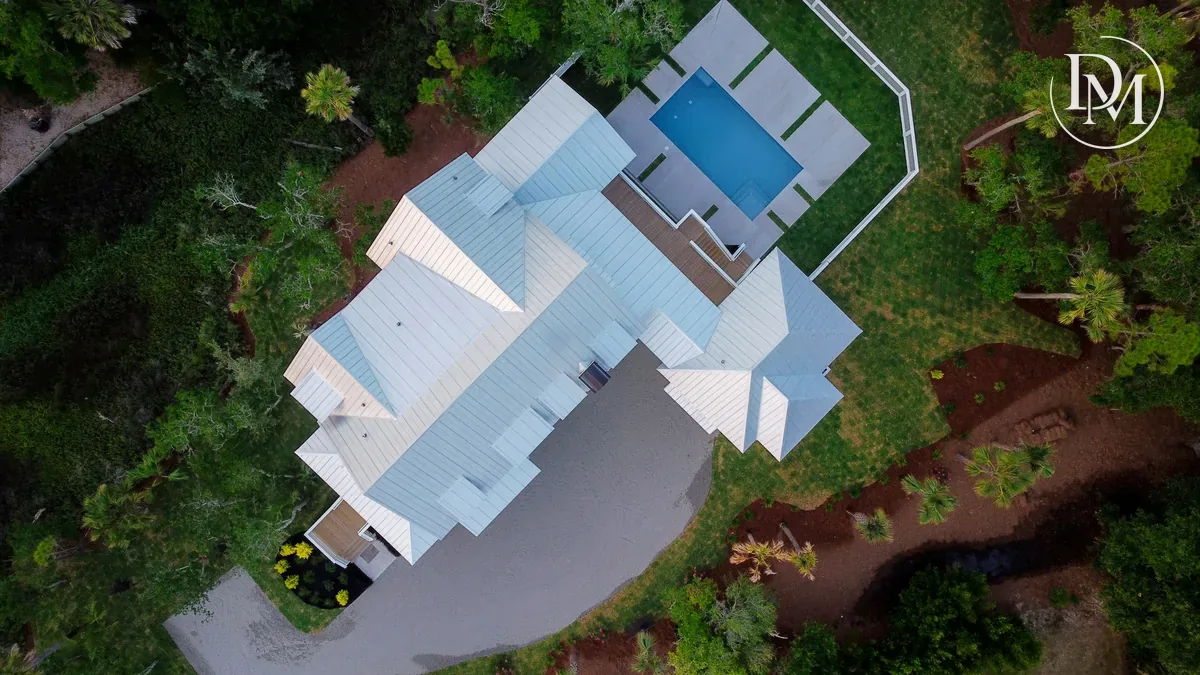
When you sell a New Jersey home for more than $1 million, two State charges are yours as the seller: the realty transfer fee and the Graduated Percent Fee, which most people still call the mansion tax. On a $1.5 million sale at the full rates, the State's published tables put those two at $30,625 together, before your mortgage payoff, attorney, brokerage fee, property tax adjustments and town certificates.
I'm Dennis Mark Interdonato with The Dennis Mark Group at Keller Williams Realty Ocean Living. When I sit down with the owner of a luxury or waterfront home in Monmouth or Ocean County, these numbers come first, because each one comes off the top of what you net.
What is the realty transfer fee, and who pays it?
The NJ Division of Taxation says the State imposes the realty transfer fee "on the seller of real property for recording a deed for the sale." It's figured on the price recited in the deed, and it applies to every transfer unless the deed fits an exemption.
For a sale over $350,000, the State's rate table charges these amounts for each $500 of the price:
- Up to $150,000: $2.90
- $150,000 to $200,000: $4.25
- $200,000 to $550,000: $4.80
- $550,000 to $850,000: $5.30
- $850,000 to $1,000,000: $5.80
- Over $1,000,000: $6.05
Lower rates exist for senior citizens, blind or disabled persons, and low and moderate income housing, with conditions on Form RTF-1, including that the seller lives in the home and is a New Jersey resident.
What is the mansion tax in New Jersey now?
Its official name is the Graduated Percent Fee. Under P.L. 2025, c. 69, effective July 10, 2025, the old 1% fee on buyers became a graduated fee that the Division's notice says "is legally imposed on the grantor instead of the grantee," meaning the seller. The rates on a deed over $1,000,000:
- Over $1,000,000 to $2,000,000: 1%
- Over $2,000,000 to $2,500,000: 2%
- Over $2,500,000 to $3,000,000: 2.5%
- Over $3,000,000 to $3,500,000: 3%
- Over $3,500,000: 3.5%
The percentage applies to the whole price, not only the part over $1 million. The State calls it "a straight application of a percentage of total consideration." Some transfers and property classes don't owe it, which I cover in NJ mansion tax exemptions. The Division also says the parties can "apportion or shift the burden of payment in their contract negotiations," so how your contract handles it is your attorney's call. More in who pays the mansion tax now, and how much.
What do the State fees look like on a $1.5 million sale?
Here's the math at the full rates, with no exemption. Each line is a slice of the price, divided by $500, times that slice's rate.
Realty transfer fee
- First $150,000: 300 × $2.90 = $870
- Next $50,000: 100 × $4.25 = $425
- Next $350,000: 700 × $4.80 = $3,360
- Next $300,000: 600 × $5.30 = $3,180
- Next $150,000: 300 × $5.80 = $1,740
- Last $500,000: 1,000 × $6.05 = $6,050
- Total: $15,625
Graduated Percent Fee: 1% × $1,500,000 = $15,000.
Both together: $30,625.
Higher prices land in higher brackets. The State's own example is a $2.75 million deed: 2.5% × $2.75 million = $68,750, "in addition to the other grantor fees." The same rate table puts the realty transfer fee on that sale at $30,750, for $99,500 together. That's my math from the published rates, not a bill. Your settlement agent prepares the real figures, and both fees are paid to the county when the deed is recorded.
What else comes out of a seller's proceeds?
- Your mortgage payoff. The CFPB says your payoff amount is different from your current balance: it includes interest through the payoff day and may include unpaid fees or a prepayment penalty. Federal rules require the servicer to send an accurate payoff statement within seven business days of a written request from you or someone acting for you.
- Your attorney. A New Jersey sales contract prepared by a real estate licensee carries an attorney review clause. In Conley v. Guerrero (2017), the New Jersey Supreme Court said the review period "remains three business days." Your attorney's fee is set by your agreement with your attorney.
- The brokerage fee. It's set by agreement, in the listing agreement you sign. Compare what you get for it. Before you sign anything with me, you get a market evaluation and a written marketing plan.
- Property taxes, adjusted to the day. The federal Closing Disclosure rules list prorated taxes both ways: unpaid taxes the seller owes the buyer, and prepaid taxes the buyer pays back to the seller.
- Town certificates. State law says an owner can't sell a one- or two-family home without first getting a certificate of compliance with the smoke alarm rules from the local enforcing agency, and the fee is set locally. The NJ Division of Fire Safety's January 2026 bulletin describes it as covering smoke alarms, carbon monoxide alarms and a secondary power source label. Older checklists also list a fire extinguisher, so ask your town's fire official what the inspection covers today.
- Getting the house ready. This one's a choice, not a fee. Every house is different, and so is the math. See how I approach home staging.
What if you don't live in New Jersey?
If the house is a second home and you live in another state, New Jersey requires an estimated income tax payment at closing. The Division of Taxation says nonresident sellers make it "whether or not they have a gain on the sale or transfer." Its GIT/REP FAQ explains the amount: your share of the gain times the highest New Jersey rate, 10.75%, but never less than 2% of the price. On a $1.5 million sale, that 2% floor alone is $30,000.
It's an estimated payment, not necessarily your final tax: you file Form GIT/REP-1 and pay at closing, or prepay with GIT/REP-2, and the Division explains how to request a refund of any overpayment. Part-year residents count as nonresidents. Exemptions and waivers are on Forms GIT/REP-3 and GIT/REP-4, and a New Jersey resident certifies residency on GIT/REP-3 instead. Have your tax professional run this before you list.
Will you owe federal tax on the gain?
That's a question for your tax professional. The starting point is IRS Publication 523, Selling Your Home, which explains the eligibility test for excluding up to $250,000 of gain, or $500,000 if married filing jointly. I cover the basics in When I sell my home, do I pay tax?
How do you get a real number for your home?
The State fees start with the price. Get a starting point from my home value tool, read how I sell homes and the luxury homes page, and get my free Luxury & Waterfront Guide.
Frequently Asked Questions
Who pays the mansion tax in New Jersey?
The seller. For deeds submitted for recording on or after July 10, 2025, the Division of Taxation says the seller is statutorily responsible for both the realty transfer fee and the Graduated Percent Fee.
Is the mansion tax only on the amount over $1 million?
No. It's a percentage of the whole price. A $1.5 million sale owes 1% of $1.5 million, or $15,000.
How much is the realty transfer fee on a $1 million sale?
At the full rates, $9,575 by the State's table. Above $1 million, each additional $500 adds $6.05.
Do nonresident sellers pay 2% at closing?
At least 2% of the price, unless an exemption or waiver applies. If your share of the gain times 10.75% is higher, you pay that.
This is general information, not legal, tax or lending advice. The fee figures are my arithmetic from the NJ Division of Taxation's published rates; your attorney, settlement agent and tax professional confirm the numbers for your sale.
About the author
Dennis Mark Interdonato is a REALTOR® and Master CDRE® who leads The Dennis Mark Group at Keller Williams Realty Ocean Living in Point Pleasant, NJ, helping buyers and sellers throughout New Jersey make their next move, with Monmouth and Ocean County as home base. He has been in construction since 2003, building and renovating New Jersey homes. Read more about Dennis Mark.
Keep reading
- NJ mansion tax: who pays it now, and how much is it?
- Which transfers don't owe the Graduated Percent Fee?
- What paperwork do I need to sell my home in New Jersey?
- Have a question this didn't answer? Send it to Dennis Mark and it may become the next article.