NJ Property Tax Quarters When You're Selling the Marital Home
Published | Posted by Dennis Mark Interdonato
- Divorce
- Property Taxes
- Closing
- New Jersey
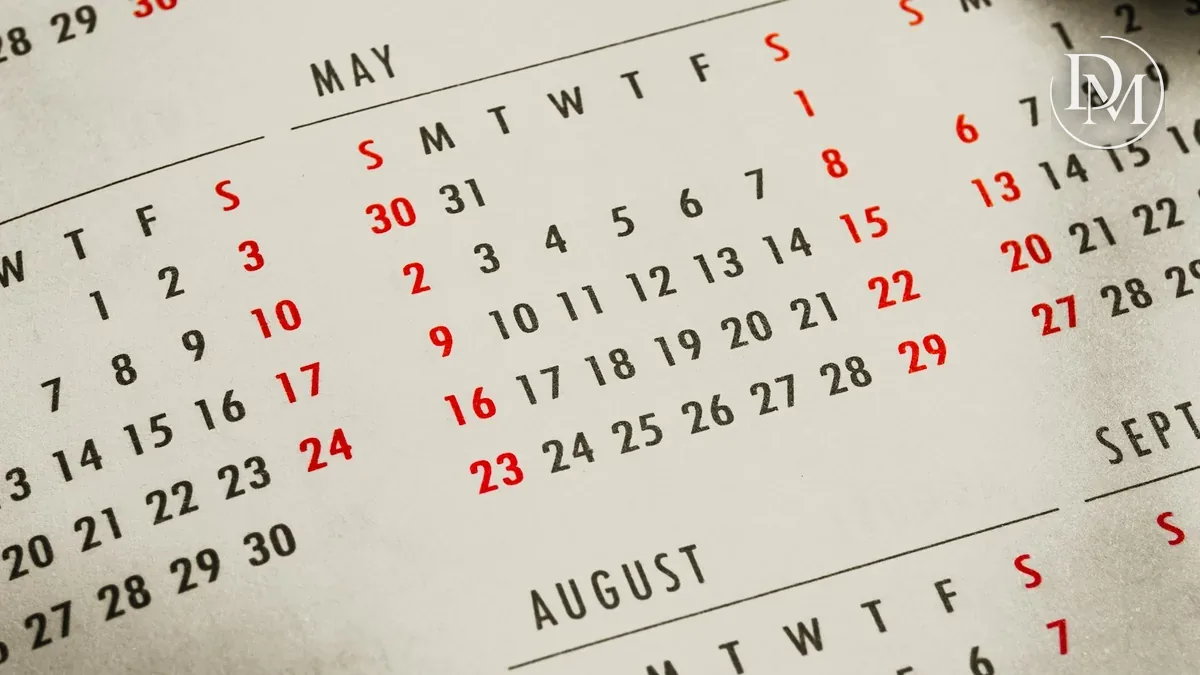
New Jersey property taxes come due four times a year, on February 1, May 1, August 1 and November 1, and they keep coming due while the marital home is for sale. Who pays each quarter before closing is set by your agreement, a court order or your attorneys. At closing, the taxes are settled between you and the buyer as adjustments on the closing figures.
I'm Dennis Mark Interdonato, a REALTOR® and Master CDRE® with The Dennis Mark Group at Keller Williams Realty Ocean Living. The November 1 quarter came due earlier this month, and the next bill goes out by December 31, so this is a good week to look at how the tax calendar lines up with a divorce home sale.
Before we start, here's where I stand. I sell homes. I'm not an attorney, a tax professional or a lender, and I'm not licensed to give legal, tax or mortgage advice. What you're about to read is my own research from the New Jersey Division of Local Government Services, the Consumer Financial Protection Bureau and the federal mortgage servicing rules, read on November 9, 2026. I could have something wrong, and rules change, so take these as questions for your attorney, your tax professional and your lender.
When are New Jersey property taxes due?
The Division of Local Government Services lists the statutory schedule in its guide to Chapter 72 of the Laws of 1994, the law that set it up. Each quarter has a mailing date and a due date:
- First quarter: mailed by December 31, due February 1
- Second quarter: mailed by March 31, due May 1
- Third quarter: mailed by June 14, due August 1
- Fourth quarter: mailed by September 30, due November 1
The law the guide prints says that if a quarter is unpaid after its date, it becomes delinquent.
If your house is listed right now, plan on the February 1 quarter coming due before a closing.
What happens if a quarter is paid late?
The town charges interest. The same guide says that when bills go out after the statutory mailing date, payments received after the payment date on the bill accrue interest from the statutory due date.
The town sets the rate. A Local Finance Notice the Division issued on October 15, 2020 says N.J.S.A. 54:4-67 lets the governing body set the interest rate on unpaid taxes, and that the rate can't exceed 8% a year on the first $1,500 of the delinquency and 18% a year on the amount over $1,500. Your tax collector's office can tell you your town's rate and any grace period it allows.
A missed quarter can happen when each spouse thinks the other one paid. Ask your tax collector's office what's been paid before each due date.
Who pays the quarters while the house is for sale?
That's set by your agreement, a court order or your attorneys, not by the tax bill. The bill comes to the property. It doesn't know who moved out.
Plenty of owners never write a tax check, because the CFPB says many lenders require taxes and insurance to be paid through escrow. The CFPB explains that an escrow account is set up by the mortgage lender, the money comes from a portion of the monthly payment, and the servicer pays the tax and insurance bills on your behalf. The federal rule at 12 CFR 1024.34 says that when the loan requires escrow, the servicer has to make those payments on time, before the deadline to avoid a penalty.
With escrow, the real question is who keeps making the mortgage payment that funds it. That one goes to your attorneys.
If your taxes aren't in escrow, put the four due dates where both of you can see them, and agree in writing who pays which quarter.
How are property taxes split with the buyer at closing?
They're settled as adjustments on the closing figures. The CFPB's guide to the Closing Disclosure describes two kinds:
- Items paid by the seller in advance. Costs the seller prepaid, which the buyer reimburses to the seller.
- Items unpaid by the seller. Prior taxes and other fees owed by the seller that the buyer will pay in the future, so the seller reimburses the buyer at closing.
The 2020 Local Finance Notice describes New Jersey's property tax quarters as January 1 to March 31, April 1 to June 30, July 1 to September 30 and October 1 to December 31. Where your closing date falls inside a quarter, and whether that quarter was paid, is what the closing agent works from.
The adjustment comes out of, or adds to, the proceeds before they're split, and the split follows your agreement or order. Every report, every piece of showing feedback and every offer goes to both owners at the same time, and the closing figures should too.
What happens to the escrow money after the sale or a buyout?
When the old mortgage is paid off at closing, any money left in the escrow account doesn't vanish. Under 12 CFR 1024.34, within 20 days of payoff, not counting legal public holidays, Saturdays and Sundays, the servicer has to return what's left in the escrow account to the borrower.
If both of you are on the loan, ask your attorneys now where that refund goes and how it gets split. It's a small line, and it gets lost once the house is closed.
A buyout can differ. The same rule lets the servicer move leftover escrow money into the escrow on a new loan, if the borrower agrees and the new loan comes from the same lender, the lender that owns the old loan, or a lender using the same servicer. Your attorneys decide whose money it is.
Frequently Asked Questions
We're listing in December. Will the February 1 quarter come up?
It may. The guide sets December 31 as the mailing date and February 1 as the due date for the first quarter. If you close after February 1, that quarter has to be paid on time. If you close before it, ask the closing agent how that quarter shows up in the adjustments.
One of us moved out. Can the tax bill go to both of us?
Ask your tax collector's office what it can do. If your taxes are in escrow, your servicer pays the bill, and the payment you both care about is the monthly mortgage payment.
Once more, because it matters: this is my own reading of state notices and federal rules, not legal, tax or mortgage advice. I could be wrong or out of date by the time you read this, and your attorney, tax professional and lender have the final word. If you're still deciding whether to keep it or sell it, start with a neutral home value both of you can see.
This is general information, not legal, tax, accounting or lending advice. Sources: the NJ Division of Local Government Services (its Chapter 72 guide and Local Finance Notice 2020-25), the CFPB and 12 CFR 1024.34, as posted on November 9, 2026.
About the author
Dennis Mark Interdonato is a REALTOR® and Master CDRE® who leads The Dennis Mark Group at Keller Williams Realty Ocean Living in Point Pleasant, NJ, helping buyers and sellers throughout New Jersey make their next move, with Monmouth and Ocean County as home base. Read more about Dennis Mark.
Keep reading
- Who pays the mortgage, repairs and costs while the house is listed
- What happens at closing during a divorce home sale
- Splitting the proceeds: costs to plan for at a divorce closing
- Who deducts the mortgage interest and property taxes the year you separate
- Have a question this didn't answer? Send it to Dennis Mark.