Virtual Staging or Professional Staging When You Sell in New Jersey?
Published | Posted by Dennis Mark Interdonato
- Home Marketing
- Home Staging
- Home Selling
- Real Estate Marketing
Professional staging puts real furniture in the rooms buyers walk through, and virtual staging adds furniture to the photos only, so the choice comes down to whether the home will be shown empty and what the room needs to explain itself. Either way, what's fair to show buyers is a true picture of the house: a virtually staged photo is labeled, the unstaged photo stays available, and nothing about the home itself gets changed.
I'm Dennis Mark Interdonato with The Dennis Mark Group at Keller Williams Realty Ocean Living. Virtual staging and professional staging are both on the list of what a marketing plan of mine can include, and I pick between them home by home. Here's how I think about it for sellers in Monmouth and Ocean County and across New Jersey.
What's the difference between virtual and professional staging?
Professional staging brings in furniture, rugs, art and accessories, or rearranges what you already own, so the rooms look their best in the photos and in person. Buyers see the same thing online that they see when they walk in.
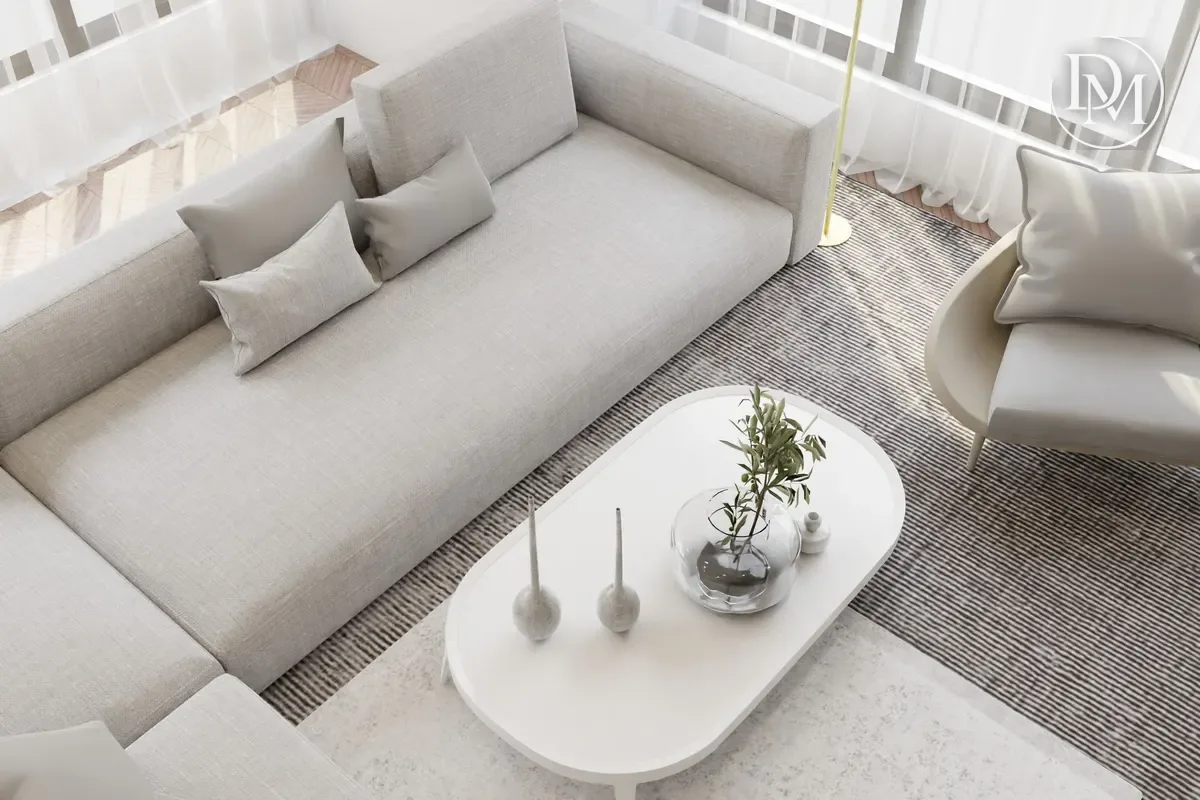
Virtual staging adds furniture and decor to a photo of a room on a computer. The room itself stays as it is. A buyer who falls for the virtually staged living room will walk into the real one and find it empty, or furnished the way you live in it.
What comes before either kind of staging?
Preparation. Staging can't make up for a house that isn't ready, and virtual staging should never be used to cover a condition problem. Before I talk about furniture, we go through the house for what to declutter, clean, repair and paint. I've been in construction since 2003, building and renovating New Jersey homes, so I'm looking at the house the way a buyer's inspector will, too.
My article on decluttering before selling a home in New Jersey walks through it room by room, and this guide to upgrades and improvements covers what's worth doing before you list.
When does professional staging make sense?
- The home is vacant and buyers will tour it. Empty rooms are hard to size up. Furniture shows where a bed fits and how a living room works.
- A room's purpose isn't obvious. A bonus room, a big landing or an open floor plan reads better when it's set up as something.
- Your own furniture works against the room. Partial staging, mixing a few rented pieces with what you keep, can fix that without emptying the house.
- The showings matter as much as the photos. Professional staging carries from the listing photos into every showing and open house.
When does virtual staging make sense?
- The home is vacant and the goal is the online first impression. Virtual staging helps buyers picture an empty room while they're scrolling.
- A room photographs flat when it's empty. Staging the photo can show its scale.
- Furnishing every room in person isn't practical, because of the timing, the budget or a home you've already moved out of.
Many homes get a mix: professional staging in the main rooms buyers spend the most time in, and a virtually staged photo or two of rooms that stay empty. Costs vary by home and by company, so get a quote before you decide. I'm not going to give you a percentage that staging adds to a price, because no figure like that would hold for your house.
What's fair to show buyers?
Article 12 of the REALTOR® Code of Ethics says REALTORS® "shall present a true picture in their advertising, marketing, and other representations." Standard of Practice 12-10 says that obligation includes images, and it prohibits manipulating listing content in any way that produces a deceptive or misleading result.
New Jersey's real estate advertising rule, N.J.A.C. 11:5-6.1(r), says no ad may contain false, misleading or deceptive claims, and when an ad makes a claim that's likely to mislead without qualifying information, that information has to be disclosed in a clear and conspicuous way.
Here's the standard virtual staging should meet:
- Label it. Every virtually staged photo says it's virtually staged.
- Keep the real room in the listing. The unstaged photo stays available next to it.
- Add furniture, never change the house. No new floors, no painted walls, no removed outlets or columns, no edited views. If it's built in, it stays the way it is.
- Keep the tour accurate. A 3D tour and floor plan show the rooms as they really are, and the staged photos have to agree with them.
Your MLS may have its own rules about edited photos, and your listing agent should explain them. This is general information, not legal advice.
Does staging work the same way in an occupied home?
Usually you won't need either. In a home you're still living in, staging mostly means editing: fewer pieces in each room, furniture pulled off the walls into conversation groups, clear counters and closets with space in them. A stager can do a consultation and work with what you own. Virtual staging is rarely the answer for a furnished room, because the buyer will see your furniture at the showing.
Frequently Asked Questions
Do virtually staged photos have to be labeled?
The REALTOR® Code of Ethics requires a true picture in advertising, and New Jersey's advertising rule requires clear and conspicuous disclosure when a claim would mislead without it. Labeling a virtually staged photo is what keeps it from misleading anyone. Ask your listing agent about your MLS's photo rules too. General information, not legal advice.
Can virtual staging change the floors or paint color?
It shouldn't. Virtual staging adds furniture and decor. Changing what's built into the house shows buyers something that isn't there.
Is professional staging worth it?
It depends on the home, the price point and the competition. I'll tell you when I think it's worth it and when decluttering and rearranging will do the job, and you can compare that against a stager's quote. A starting number from the home value tool helps you weigh the cost.
Should I stage before the photos or before the first showing?
Before the photos. The listing photos are the first showing for almost every buyer, and the first two weeks on the market set the price. Here's why the first two weeks matter.
About the author
Dennis Mark Interdonato is a REALTOR® and Master CDRE® who leads The Dennis Mark Group at Keller Williams Realty Ocean Living in Point Pleasant, NJ, helping buyers and sellers throughout New Jersey make their next move, with Monmouth and Ocean County as home base. Read more about Dennis Mark.