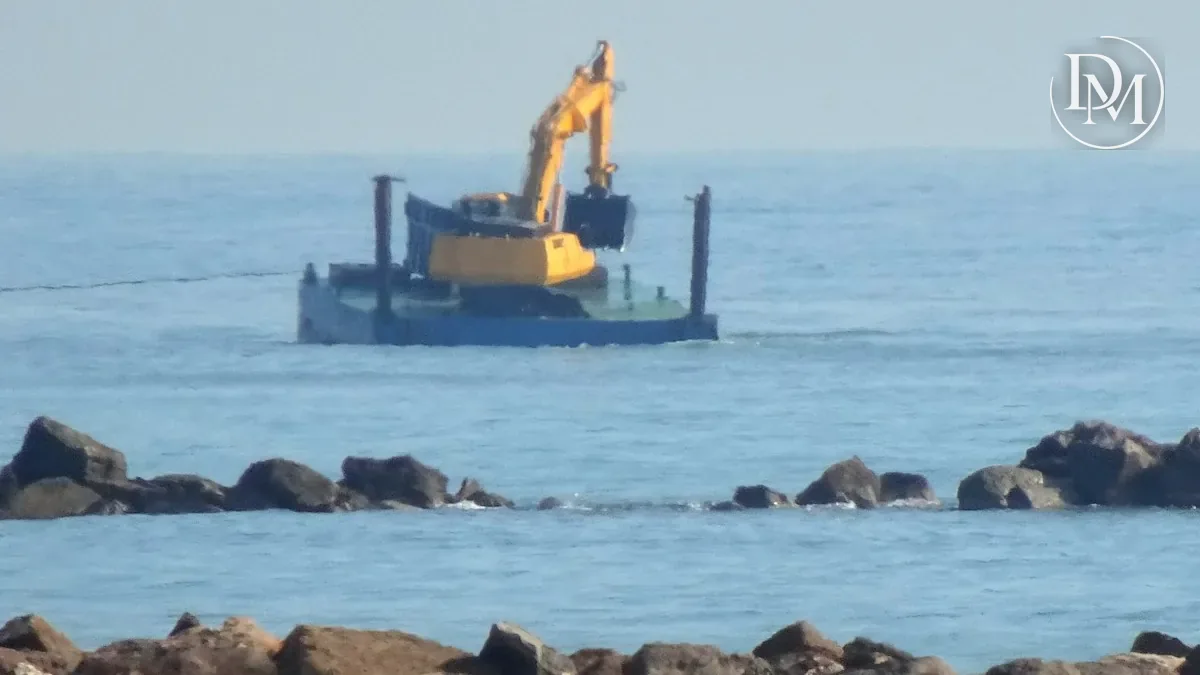
Lagoon Dredging in New Jersey: What It Is, What Permits It Takes and Who Handles It
Published | Posted by Dennis Mark Interdonato
- Waterfront
- Waterfront Homes
- Coastal Permits
- Home Buying
Lagoon dredging is the work of removing sediment that has built up in a lagoon so boats can keep using it. In New Jersey it's regulated work: dredging at or below the mean high water line needs an NJDEP coastal permit, often a tidelands license and an approved place to put the material, so before you buy on a lagoon, ask who handles it and whether a project is planned.
I'm Dennis Mark Interdonato with The Dennis Mark Group. Plenty of waterfront homes in Monmouth and Ocean County sit on lagoons, and the water behind the house matters as much as the house. Here's how the State's rules treat lagoon dredging, in general terms, and the questions worth asking before you sign anything.
What counts as a man-made lagoon?
NJDEP's Coastal Zone Management Rules define a man-made lagoon as an artificially created linear waterway, sometimes branched, that ends in a dead end with no significant upland drainage. The rules explain that lagoons were created by dredging and filling wetlands, bay bottom and other estuarine water areas to create waterfront lots for homes. A natural waterway that was later filled, channelized or bulkheaded doesn't count, and neither does a bulkheaded boat slip (N.J.A.C. 7:7-1.5).
That definition matters, because some of the State's general permits are written only for man-made lagoons. The rules apply to every man-made waterway and lagoon that the tide reaches (N.J.A.C. 7:7-2.4(b)).
What is maintenance dredging?
The rules describe maintenance dredging as the periodic removal of sediment that has built up in channels, marinas, lagoons, canals or boat moorings that were legally dredged before, so boats can keep moving safely. To qualify, the applicant shows from historical records, such as earlier dredging permits, dredging contracts, old depth surveys or aerial photographs, that the project matches an earlier one: the same length and width, the same depth as before or as the area historically had, and an area that boats needing that depth have used (N.J.A.C. 7:7-12.6).
Anything that doesn't fit that definition is new dredging, which the rules handle under a separate section (N.J.A.C. 7:7-12.7).
What permits does lagoon dredging take?
Removing material from the bottom at or below the mean high water line is regulated development that needs an NJDEP permit (N.J.A.C. 7:7-2.4(c)). Which permit depends on the size of the job:
- General Permit 16, minor maintenance dredging in man-made lagoons. It covers jobs of no more than 100 cubic yards, dredged no deeper than six feet below mean low water and no deeper than the water outside the dredged area, with the material placed on an upland site and stabilized (N.J.A.C. 7:7-6.16).
- A waterfront development individual permit for bigger projects. NJDEP's dredging appendix says that in most cases, dredging projects in the State's tidal waters used by boats need a waterfront development permit and a water quality certificate, issued together, and it recommends a pre-application conference before filing (N.J.A.C. 7:7, Appendix G).
- Federal permits. The same appendix notes that placing dredged material into waters of the United States needs a U.S. Army Corps of Engineers permit under Section 404 of the Clean Water Act, and that the Corps also has authority over dredging under Section 10 of the Rivers and Harbors Act of 1899.
Does dredging also need a tidelands license?
Often. NJDEP's tidelands license instructions list dredging within State-owned tidal water as one of the uses that needs a license (TD-028). A dredging license can't be combined with other projects, generally runs one year and can't be renewed, so if it expires before the work starts, a new application is needed. The State won't issue one without a valid waterfront development permit, and if the applicant doesn't own all of the upland next to the dredging, written permission is required from every owner whose property fronts the project.
Whether the water behind a particular lot is State-owned tidelands is a title question. Your attorney and title company check it, and what a riparian grant is explains claims, grants and licenses.
Where does the dredged material go?
This is often the part that takes the most planning. Under NJDEP's rules, maintenance dredging is acceptable only when an acceptable placement site with enough capacity will be used, and the Department may require testing of the sediment before approving where it goes. NJDEP can also limit some dredging to certain seasons to protect fish and shellfish (N.J.A.C. 7:7-12.6(c)). Its dredging appendix lists the options as placement in water, upland containment or disposal, and beneficial uses of the material.
The New Jersey Department of Transportation's Office of Maritime Resources has written that, in most cases, the biggest obstacle to a dredging project is finding a place to dewater, manage or place the material (NJDOT).
Who handles dredging for a lagoon?
For the main routes, the State does. Since 2014, NJDOT's Office of Maritime Resources has managed a network of 220 marked and identified State channels that give boats access to more than 200 nautical miles of waterway (NJDOT Statewide Dredging Program).
A lagoon is a different question, and there isn't one answer for every lagoon. NJDOT notes that it can't require private marinas, towns, counties or other levels of government to work together on dredging, so each project comes together through whoever takes it on. That's why the town is the first call. Ask:
- Who handled dredging in this lagoon the last time, and when?
- Is a project planned, applied for or permitted now?
- How would it be paid for, and would any part of the cost fall on the owners along the lagoon?
- Is a site approved to take the material?
Ask the seller too. New Jersey's property condition disclosure statement asks whether the seller knows of shared or common areas, such as docks, walls and bulkheads, or maintenance agreements affecting the property (N.J.A.C. 13:45A-29.1). Ask your attorney whether the title and municipal searches show any assessment.
What else should a buyer check on a lagoon home?
Check the water at the dock at low tide and compare it with the boat you own or plan to buy. How to check water depth and bridge clearance walks through NOAA's charts and tide predictions. Have the bulkhead looked at by a specialist inside your inspection period; bulkhead checks before you buy covers who and what to ask for. As a former New Jersey home builder and residential remodeler, I give clients a construction-level read on the house. The water, and what holds it back, deserve the same attention.
When you're ready to look, search waterfront homes, see how I approach waterfront homes, and read how I help buyers. Already own on a lagoon? Start with what your home is worth, and if you're selling to buy on the water, see selling and buying at the same time.
Frequently Asked Questions
Do I need a permit to dredge behind my house?
Usually. Dredging at or below the mean high water line needs an NJDEP coastal permit. General Permit 16 covers minor maintenance dredging in man-made lagoons within set limits, and larger projects need an individual permit. NJDEP decides which one applies.
How deep can a lagoon be dredged under the general permit?
General Permit 16 allows no more than six feet below mean low water, no deeper than the water outside the dredged area, and no more than 100 cubic yards of material.
Does the State dredge lagoons?
NJDOT manages a network of 220 State channels. For a specific lagoon, ask the town who handles dredging there and whether a project is planned.
What's the difference between maintenance dredging and new dredging?
Maintenance dredging restores an area that was legally dredged before to the same dimensions and depth, shown through historical records. Everything else is new dredging, under a separate rule.
This is general information, not legal, insurance, engineering or lending advice. NJDEP decides which permit a dredging project needs, and your attorney advises on title and assessments. Sources checked October 12, 2026.
About the author
Dennis Mark Interdonato is a REALTOR® and Master CDRE® who leads The Dennis Mark Group at Keller Williams Realty Ocean Living in Point Pleasant, NJ, helping buyers and sellers throughout New Jersey make their next move, with Monmouth and Ocean County as home base. Read more about Dennis Mark.
Keep reading
- Waterfront homes in New Jersey: what buyers should know before you buy
- Have a question this didn't answer? Send it to Dennis Mark and it may become the next article.