Selling a Waterfront Home in New Jersey: The Documents to Gather Before You List
Published | Posted by Dennis Mark Interdonato
- Luxury
- Waterfront
- Home Selling
- Waterfront Homes
- Seller Disclosure
Before you list a waterfront home in New Jersey, gather the paperwork a buyer's attorney and insurance agent will ask for: your answers to the State's flood disclosure questions, any FEMA elevation certificate, your flood insurance declarations page, tidelands grants or licenses, the permits for your dock, lift and bulkhead, and a current survey. Having them ready before the first showing keeps a strong offer from stalling while everyone waits on documents.
I'm Dennis Mark Interdonato with The Dennis Mark Group.
Why gather documents before you list?
Timing. The first two weeks on the market set the price, and the questions a waterfront buyer asks come early. Once you accept an offer, New Jersey's attorney review period is three business days under N.J.A.C. 11:5-6.2, and either side's attorney can disapprove the contract in that window. A missing permit or an unanswered tidelands question is much easier to handle in week one of your listing than on day two of attorney review.
1. Your answers to the flood questions on the disclosure form
New Jersey's flood disclosure law, P.L. 2023, c. 93 (N.J.S.A. 56:8-19.2), requires a seller to answer flood questions on the property condition disclosure statement before the buyer is obligated under any contract. The questions cover:
- Whether the property is in FEMA's Special Flood Hazard Area or Moderate Risk Flood Hazard Area
- Whether the property is subject to a federal requirement to carry flood insurance
- Whether you, or any previous owner you know of, received federal disaster assistance for flood damage
- Whether there is flood insurance on the property
- Whether a FEMA elevation certificate is available
- Whether you've filed a flood insurance claim, and the amount received if approved
- Whether the property has had flood damage, water seepage or pooled water from a natural flood event, and how many times
The form allows yes, no or unknown, and a yes needs an explanation. Gather what you need to answer accurately, and talk to your attorney about anything you're unsure of.
2. The FEMA elevation certificate
If one is available, the disclosure form says it must be shared with the buyer, and the buyer may be able to use it for their own flood insurance. FEMA's instructions say a completed certificate doesn't expire unless the building is physically changed in a way that affects it, and it isn't invalidated by a change in ownership. If you don't have one, check with the town's floodplain manager before hiring a surveyor. More in what is an elevation certificate.
3. Your flood insurance declarations page
An NFIP policy with building coverage can be assigned to your buyer with your written consent, and you sign the assignment on or before the closing date. The declarations page lets the buyer's agent compare that policy with a new one. Keep the policy in force through closing. The details are in can a buyer take over the seller's flood policy.
4. Tidelands grants, licenses or leases
New Jersey owns land now or formerly flowed by the tide. NJDEP requires a tidelands license for fixed structures on currently flowed tidelands, such as docks, piers, floating docks and boat lifts, and for bulkhead work that goes past the mean high water line. If part of your lot was once tidal, a riparian grant may cover it. Find whatever you have: the grant deed, the license and its renewal, or a lease. NJDEP's online portal handles transferring a license to a new owner. Background is in what is a riparian grant.
5. Permits for the dock, lift and bulkhead
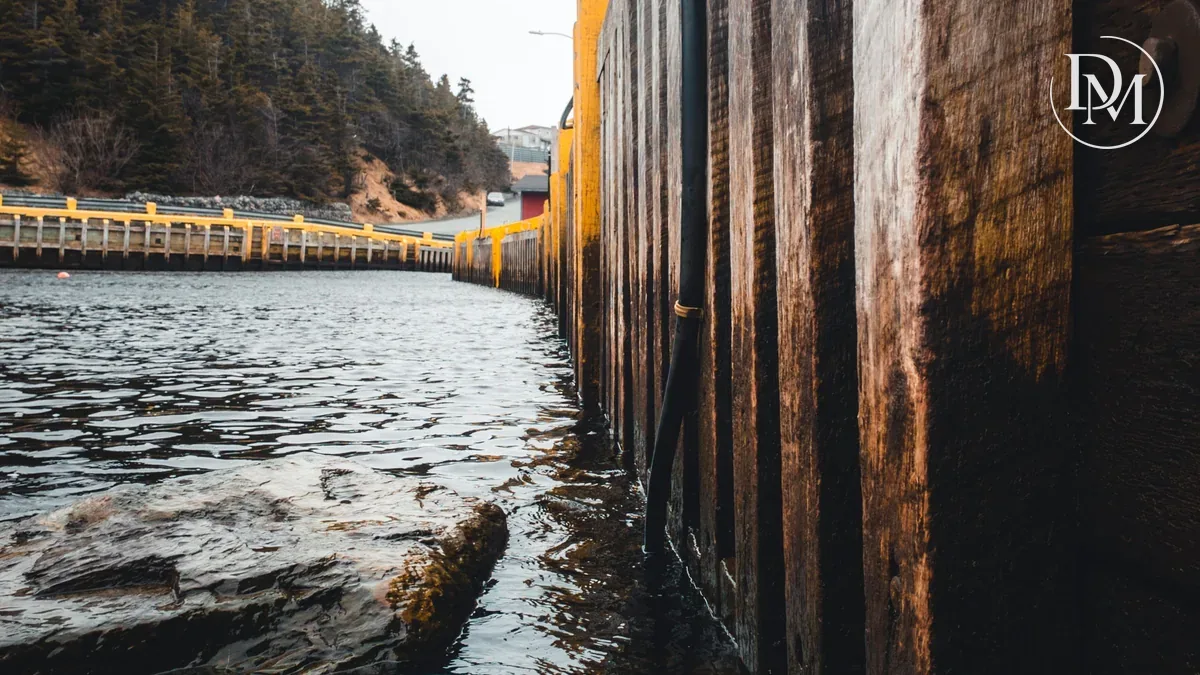
NJDEP says construction in the coastal zone needs a permit under most circumstances, and docks and boat lifts are among its examples. Pull together the NJDEP permits for any dock, lift or bulkhead work, plus the contractor's invoices and any warranty or engineering report. A buyer's attorney will want to see that what's on the water was approved. More in permits for docks, boat lifts and bulkheads.
6. A survey
Find your most recent survey. On the water, the property line, the mean high water line and the State's claim line can all matter, and NJDEP's tidelands applications call for a survey signed and sealed by a New Jersey licensed land surveyor showing those lines. Your attorney will tell you whether the buyer's title company will want an updated one.
7. Records of work on the house
Town permits and final inspection sign-offs for additions, decks, elevation work or major renovations, plus any roof, HVAC or generator warranties. As a former New Jersey home builder and remodeler, I can tell you buyers relax when the paperwork matches what they see.
What if something is missing?
Tell me and tell your attorney now. Don't guess on the disclosure form, and don't let a buyer's attorney be the first to find a gap. Missing paperwork is a problem with a process, and that process is a lot calmer before a contract than during one.
I gather these documents as part of the plan you get before you sign anything. See the full approach on the waterfront homes page, in the Luxury & Waterfront Guide and on how I sell homes.
Frequently Asked Questions
Do I have to give the buyer my elevation certificate?
If one is available, yes. New Jersey's disclosure form says an available FEMA elevation certificate must be shared with the buyer.
When does the buyer get my flood disclosures?
Before the buyer becomes obligated under any contract for the purchase, according to N.J.S.A. 56:8-19.2.
Can my tidelands license transfer to the buyer?
NJDEP's online tidelands portal includes transferring a license to a new owner. Your attorney coordinates it with the sale.
What if I don't have permits for an old dock?
Talk to your attorney before you list. NJDEP requires a tidelands license for fixed structures on currently flowed tidelands, and for a home built over the water it requires a lease even for past construction, regardless of who built it. Age alone doesn't settle the question.
This is general information, not legal, tax or lending advice. Your attorney advises on your disclosures and contract. Sources checked October 10, 2026.
About the author
Dennis Mark Interdonato is a REALTOR® and Master CDRE® who leads The Dennis Mark Group at Keller Williams Realty Ocean Living in Point Pleasant, NJ, helping buyers and sellers throughout New Jersey make their next move, with Monmouth and Ocean County as home base. Read more about Dennis Mark.
Keep reading
- Thinking about selling? Start with a free home value.
- How to market a luxury home in Monmouth and Ocean County
- Why the first two weeks on the market set your price
- Have a question this didn't answer? Send it to Dennis Mark and it may become the next article.