Association Paperwork When You Buy or Sell in a 55+ Community: Estoppel Letters, Capital Contributions and Transfer Fees
Published | Posted by Dennis Mark Interdonato
- Adult Communities
- HOA Fees
- Closing
- Home Selling
- 55+ Communities
When a home sells in a 55+ community, the association produces its own paperwork: a certificate of any unpaid assessments (often called an estoppel or payoff letter), the resale or disclosure package, and a bill for any capital contribution or transfer fee its documents allow. New Jersey law gives buyers the right to that unpaid-assessment certificate within 10 days of asking, and makes the buyer and seller jointly liable for assessments left unpaid at the sale, so these documents matter to both sides.
I'm Dennis Mark Interdonato with The Dennis Mark Group at Keller Williams Realty Ocean Living. Here's what each piece is and where the rules come from.
What is an estoppel letter in New Jersey?
New Jersey law calls it a certificate showing the amount of unpaid assessments on a home. In condominiums and planned developments, any owner, or any buyer before the sale is complete, can require one, and the association must provide it within 10 days of the request. A mortgage holder can ask for one too. Anyone other than the owner who relies on the certificate is liable only for the amounts it shows (P.L.2019, c.68, N.J.S.A. 46:8B-21 and 45:22A-44.1).
That last point is the protection. If the letter understates what's owed, the buyer isn't stuck with the difference. It also tells everyone what has to be paid off at closing.
Who is responsible for unpaid association fees when a home sells?
Both parties, until it's paid. When a home is sold, the seller and buyer are jointly and severally liable for assessments unpaid up to the sale, though the buyer can recover from the seller what the buyer pays. After closing, the buyer owes the assessments that come due. Associations also have a lien on each home for unpaid assessments, with a limited priority over earlier mortgages for up to six months of regular assessments.
Co-ops work under their own documents. The 2019 law's section for planned developments says it doesn't apply to cooperatives, and Crestwood Village Co-Op's introduction says the co-op holds a lien on each membership certificate for charges due.
What is a capital contribution?
A one-time payment to the association when a home changes hands, used for working capital or reserves, depending on the documents. In a development registered with the state under the Planned Real Estate Development Full Disclosure Act, the rules let an association require a one-time, non-refundable working capital contribution from each new owner, capped at nine times the monthly fee at closing (N.J.A.C. 5:26-8.6).
On a resale, whether there's a capital contribution, how much it is and who pays it come from that community's documents and your contract. Ask for the number before you make an offer, not at the closing table.
Is an association transfer fee the same as New Jersey's realty transfer fee?
No. The realty transfer fee is a state charge the Division of Taxation imposes on the seller for recording the deed (NJ Division of Taxation). An association transfer or resale fee is the association's own charge under its documents. Crestwood Village Co-Op's introduction, for example, notes fees and charges the seller pays when a membership transfers. For the state fee and its partial exemption, read the NJ realty transfer fee and Form RTF-1.
What's in a resale or disclosure package?
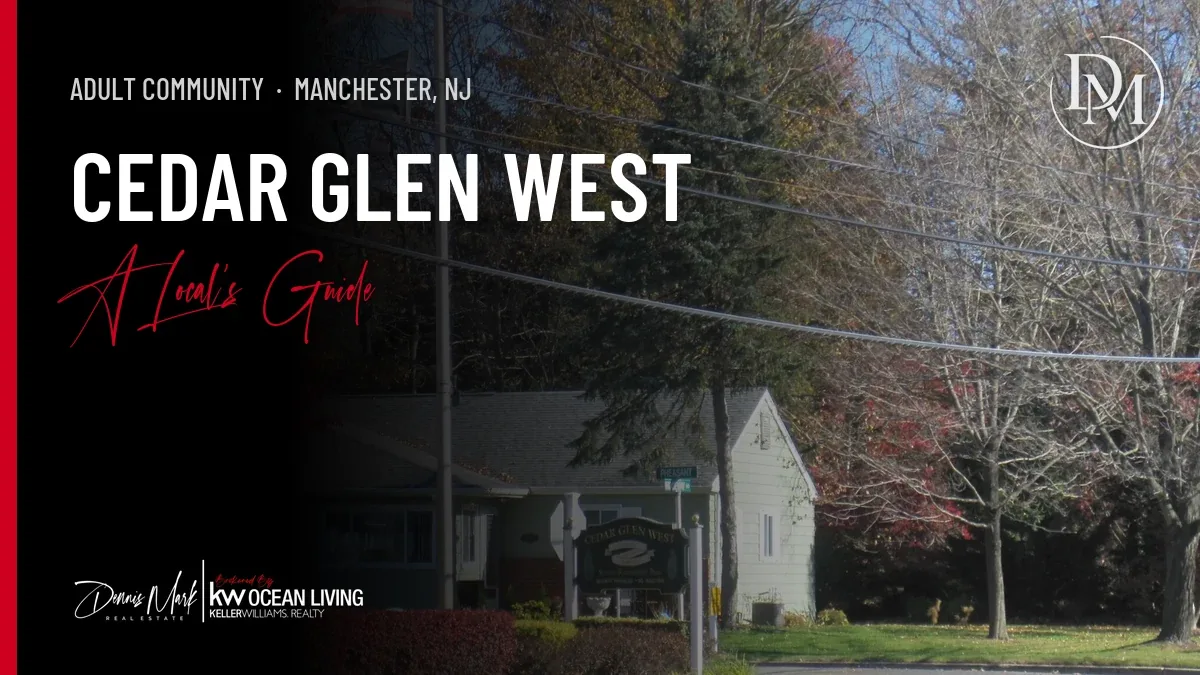
Whatever the association provides to sellers and buyers. It can include the governing documents, the rules, the budget and fee, and the forms the buyer has to complete. Cedar Glen West tells selling owners to order a resale and disclosure packet from its office, and Renaissance at Manchester links a resale package request on its site. Co-ops may add an application and a board review, as covered in buying a co-op in a Whiting 55+ community.
There's one more document to look for. If the association has chosen to fund its reserves at 85% of its 30-year plan, it must notify owners in large bold type, and the seller must give the buyer the most recent notice before the contract is signed (NJ DCA).
When should you order the paperwork?
As soon as the home is listed, or the moment a buyer is serious. New Jersey contracts prepared by real estate licensees for one- to four-family homes become final after a three-business-day attorney review period, unless an attorney cancels or proposes changes (N.J.A.C. 11:5-6.2). That's when surprises cost the least. My article on attorney review in New Jersey walks through it.
If you're getting ready to sell, start with a free home value and read how to sell a home in a 55+ community.
Frequently Asked Questions
How long does an association have to provide an estoppel letter in NJ?
Ten days after the request, for condominiums and planned developments under N.J.S.A. 46:8B-21 and 45:22A-44.1.
Who pays the capital contribution when you buy in a 55+ community?
Whoever the community's documents and your contract say pays it. Ask for the amount and the rule before you make an offer.
Can a buyer be stuck with the seller's unpaid HOA fees?
The seller and buyer are jointly liable for unpaid assessments at the sale, but the buyer can recover from the seller, and a buyer who relies on the association's certificate is liable only for what it shows.
Is the HOA transfer fee the realty transfer fee?
No. The realty transfer fee is the state's charge on the seller for recording the deed; an association fee comes from its own documents.
Does a co-op issue an estoppel certificate?
The 2019 law's section for planned developments doesn't apply to cooperatives, so ask the co-op what it issues for a sale and when. Its bylaws and proprietary lease control the transfer.
This is general information, not legal, tax or lending advice. Rules come from P.L.2019, c.68, N.J.A.C. 5:26-8.6, N.J.A.C. 11:5-6.2, the NJ Division of Taxation and the NJ Department of Community Affairs, opened October 11, 2026. Your attorney handles the association documents and closing figures.
About the author
Dennis Mark Interdonato is a REALTOR® and Master CDRE® who leads The Dennis Mark Group at Keller Williams Realty Ocean Living in Point Pleasant, NJ, helping buyers and sellers throughout New Jersey make their next move, with Monmouth and Ocean County as home base. Read more about Dennis Mark.
Keep reading
- HOA and condo fees in New Jersey
- What happens when the builder turns a 55+ community over to the owners
- Community pages such as Renaissance at Manchester and every adult community on the map
- Have a question this didn't answer? Send it to Dennis Mark.